
|
Getting your Trinity Audio player ready...
|
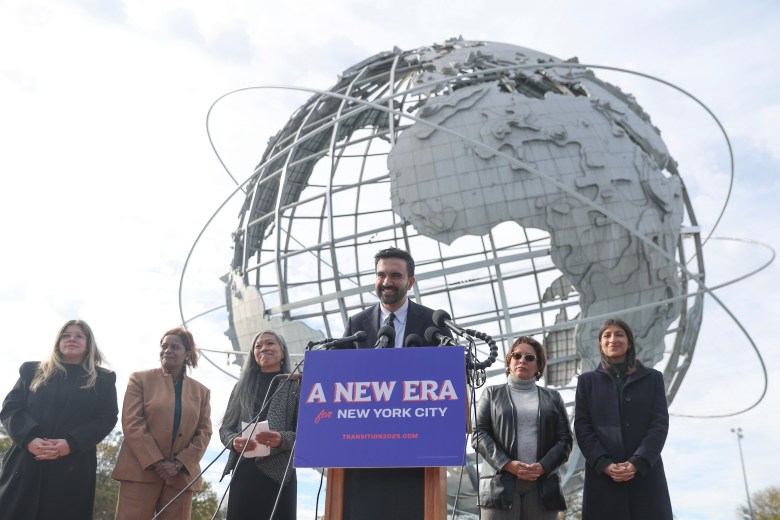
When Semafor reported this month that Lina Khan was helping New York City mayor-elect Zohran Mamdani identify overlooked legal tools to make daily life cheaper, the example that caused the most controversy was almost comically trivial: beer prices at Yankee Stadium. In her new role as co-chair of Mamdani’s transition team, the former FTC chair, who spent the Biden years cracking down on junk fees and captive-market exploitation, has been studying the statutory authority the city possesses, for example, an “unconscionable pricing” rule, new transparency requirements for algorithmic pricing, and levers embedded in stadium leases and concession contracts. Khan aims to see whether the city can use its powers to lower prices in areas where New Yorkers face monopolistic markups—stadium concessions among them. The $21 ballgame beer was only one of Khan’s illustrative examples.
Still, the prospect of using existing law to lower beer prices was enough to provoke, shall we say, a pissy response from prominent economic commentators. Barack Obama’s Council of Economic Advisers Chair Jason Furman warned about externalities like excessive drunkenness. “What happens to prices when demand changes and supply is inelastic?” Furman asked. Matt Yglesias insisted price caps would create shortages unless paired with rationing. He argued that cheaper beer would inevitably raise the “profit-maximizing” ticket price, because concessions and admission are complementary goods. Others chimed in with familiar Econ-101 cautions about deadweight loss and market distortions.
The vehemence of the response revealed something more profound than a disagreement over beer. No critics acknowledged the actual market structure they were describing. Their objections rested on the false assumption that stadiums behave like ordinary competitive environments—places with multiple sellers, substitution options, and price signals that discipline both sides. Stadiums and their vendors resemble almost none of that.
Professional sports teams operate as publicly subsidized functional monopolies. In Major League Baseball’s case, they enjoy a literal federal antitrust exemption. Every major stadium in New York is either built on public land, financed with public support, or governed through city-negotiated leases. Concessionaires operate under exclusive contracts. Once inside, fans face a single seller with no substitutes and no exit short of abandoning the entire experience. Of course, there may be multiple vendors and brands within a stadium, but concession prices are almost always set from the top.
These monopolies do not arise naturally: New York has poured hundreds of millions of public dollars into the infrastructure for Yankee Stadium, Citi Field, Madison Square Garden, and the Barclays Center. Critics defending market discipline are talking about a market that exists only because the public built and maintains it.
This is why applying competitive-market logic is a category mistake. Yglesias’s complementarity argument only makes sense in a textbook world where teams set a single profit-maximizing “bundle” price and every dollar shaved off beer must be added to tickets to break even. In reality, fans vary in whether they buy concessions at all, many don’t remember or anticipate how much they’ll spend, and modern ticket prices are driven by dynamic pricing and a volatile secondary market—so clean, dollar-for-dollar pass-through is unlikely. Teams are already pricing tickets right up to the point where higher prices would scare off enough customers to reduce revenue, which is why they routinely leave seats empty rather than cut prices. His second point—that cheaper concessions might make games more enjoyable and thus raise ticket demand—is probably valid, but that’s a good thing. The goal is fuller stadiums and better experiences, and a fair front-end ticket price for a more fun event is a perfectly reasonable trade. Only on a chalkboard does making the game more enjoyable become a policy problem.
Empirical evidence supports this. When Atlanta’s Mercedes-Benz Stadium moved to “fan-friendly pricing”—$2 hot dogs, $3 refillable drinks, $5 beers—food sales increased. Ticket prices did not rise. Shortages did not appear. Attendance improved. Far from distorting a competitive equilibrium, lower prices expanded volume in a setting where cost wasn’t the constraint on consumption, but monopoly markup.
A policy intervention will have different second-order effects than a team willingly reducing its margins, but that’s an argument for more price regulation, rather than less. If venues jack up ticket prices in response to having concessions tied to their street value, ticket price increases should be scrutinized by regulators, too. The goal is to fill more seats and stop subjecting people to rip-offs.
Stadiums fit neatly into what Brian Shearer at Vanderbilt Policy Accelerator calls captive-customer environments—markets where consumers cannot “reasonably avoid” a purchase and where firms can extract “island prices” unrelated to wholesale costs or scarcity. Airports, hospital emergency departments, and prison phone systems all exhibit similar patterns. Regulators commonly impose caps or oversight in those settings because competition cannot do its disciplining work. Stadium pricing is analytically the same.
This isn’t just about $21 beers. As The Nation reported, the Mamdani transition team is cataloguing an array of dormant or underused legal tools to lower prices across a range of markets. Section 349 of the state’s consumer-protection law prohibits “unconscionable” or “deceptive” acts in any business operating in New York, a definition courts have applied in captive environments. New algorithmic-pricing transparency rules could force rideshare companies like Uber and Lyft, as well as stadium vendors, to disclose how they set prices.
What Mamdani and Khan are exploring, then, is not some socialist fantasy about micromanaging beer prices. It is the application of existing law to a market whose structure the public has already shaped, and whose monopoly behavior the public has every right to restrict. They are standard legal powers that New York has chosen not to use until now.
The strangest part of the debate was the sense of alarm, almost a moral panic, that a city might want to make a night out at the ballgame slightly more fun for the people who paid for it. It was especially odd coming from public intellectuals who pride themselves on advising democratic candidates on issues, yet failed to see the value of ‘lower beer prices at ballgames.’ To hear the reaction, one would think a cheaper Bud Light threatened the delicate machinery of American capitalism. But fans shouldn’t have to endure monopoly markups just because economists prefer the purity of their models to the messiness of reality.