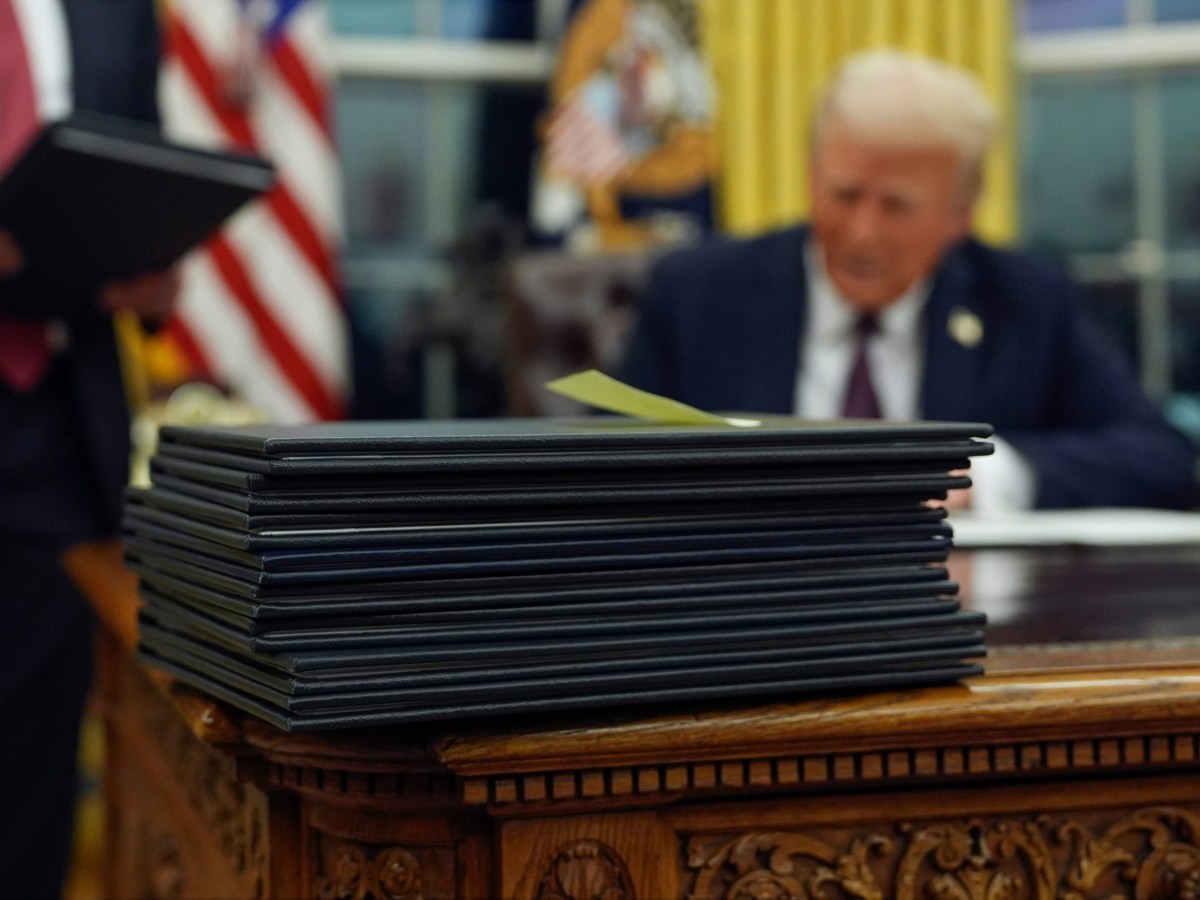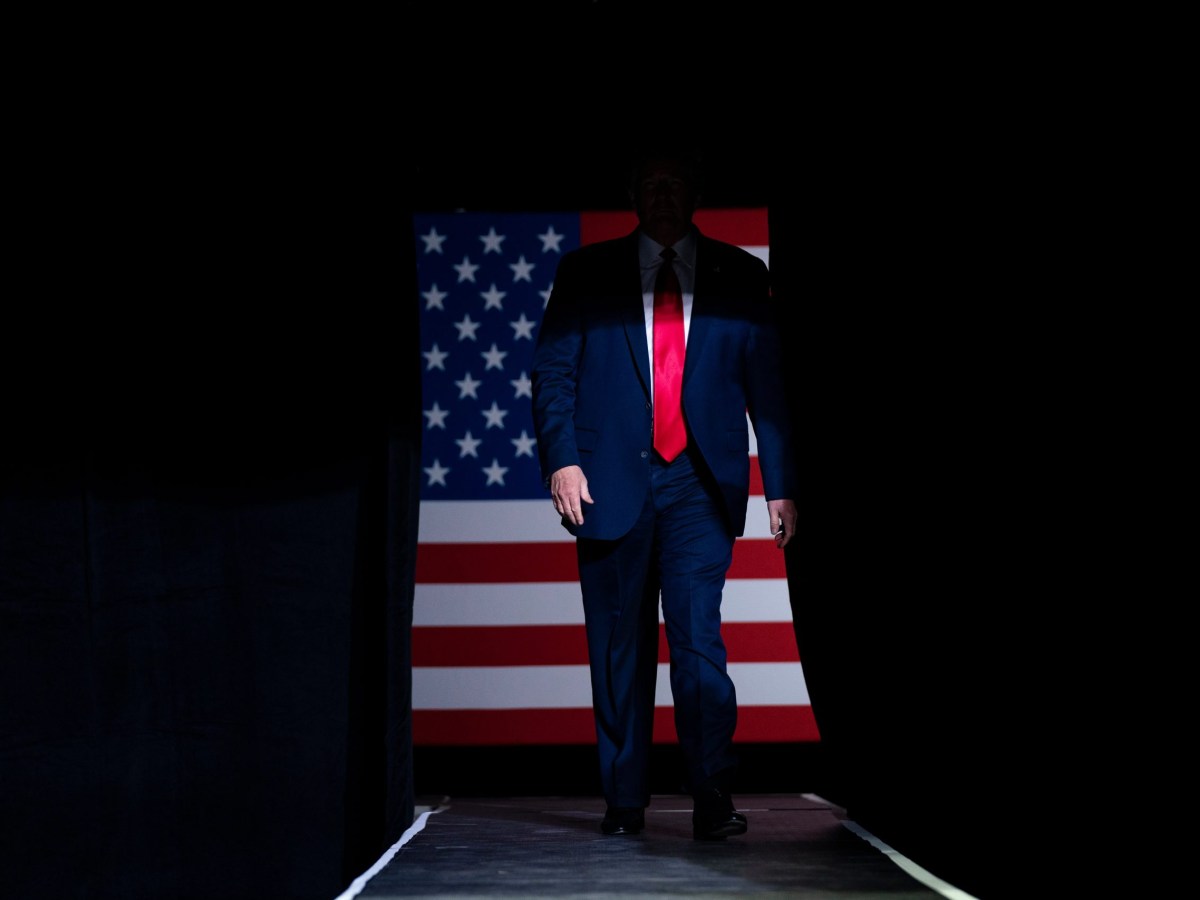

The idea that the United States awaits some dread constitutional crisis has become commonplace. For lawyers, such a crisis would likely involve Donald Trump’s administration defying the Supreme Court on some critical ruling. But other crises are readily imaginable. Might President Trump invoke the Militia Act to manipulate the 2026 congressional elections, or order the Marines to take sites in Greenland without congressional approval, which seems ever more plausible after the June 22 bombing of Iranian nuclear facilities?
Such scenarios are not unfounded, but they do not diagnose our true malady. Our ongoing constitutional crisis began with the presidential election last November 5. Reelecting an individual culpable for January 6 who has twice made a mockery of the presidential oath of office is itself a constitutional crisis. Nothing in his past or current behavior suggests that Trump has ever felt fidelity to his constitutional duties.
Once a constitutional crisis becomes an endemic condition, the term no longer usefully describes our collapsing system. Instead, we live in an era of constitutional failure when the relevant institutions cannot fulfill their responsibilities.
Because constitutional failure is a term we have never needed to use, it merits a precise definition. First, it must identify the specific situations where the government institutions have manifestly not fulfilled their constitutional functions. Second, it should treat these omissions not as occasional lapses but systemic defects. Third, it must explain how the political and ethical norms of constitutional governance have evaporated.
To apply this framework to the second Trump administration is hardly difficult. The only problem is where to begin. Consider its authoritarian reliance on executive orders to vitiate legally established government activities, its attempt to intimidate institutions outside of government to do its bidding, and its insistence that servile loyalty to the president outweighs fidelity to constitutional norms. That some commentators describe this last practice as the Führerprinzip—the Nazi principle that the will of the leader transcends all legal norms—tells us everything.
Deciding whether the Constitution is failing requires asking if and why the other two branches of government have been remiss in checking a rogue executive.
Their most important failures involve the two clauses that would have disqualified Trump from reelection: the presidential impeachment clause and Section 3 of the Fourteenth Amendment. But starting in a more obscure location is better: the two Emoluments Clauses restricting the material benefits a president can receive from other governments. In his first administration, three suits sought to force Trump to comply with these two clauses. One, brought by members of Congress, was plausibly dismissed on standing grounds, because a minority faction in Congress cannot litigate to make the body implement a power it already possesses. Two other cases, however, progressed in the lower courts, but once they were appealed, the Supreme Court slow-walked them until Trump left office, leaving the issue moot.
The Court thus casually squandered an opportunity to clarify the meaning of a provision that badly needs enforcement. All previous presidents had scrupulously adhered to the Emoluments Clauses, which embody the fundamental principle that presidents should neither seek nor hold office for private gain. The honor of holding the highest office in the land should displace every other ambition. But this president and his family have more material, even sordid aims to pursue. With Trump, the imperial presidency and the presidential emporium have converged. This White House is for sale, whether through gifts from wealthy entrepreneurs, the manipulation of tariffs, and, perhaps worst of all, the family’s active involvement in crypto meme speculations.
But the two Emoluments Clauses occupy only obscure niches in the Constitution. The same cannot be said of the powers being abused to eliminate federal agencies and departments and purge civil servants. These agencies and officials derive their authority from congressional enactments and appropriations. All are covered by the Impoundment Control Act of 1974, adopted to constrain the unilateral efforts of President Richard Nixon to reduce federal spending on his own authority. All involve the signature constitutional obligation of the president to “take care that the laws be faithfully executed,” not least because every statute requires either the assent of the chief executive or, in the case of a presidential veto, its reenactment by supermajorities in both houses of Congress.
The most fundamental purpose of constitutional government, as it evolved in 17th-century England and revolutionary America, was to make the executive power susceptible to legislative control. It did not matter whether the executive was monarchical, ministerial, or presidential. The key point established by the English Glorious Revolution of 1688 was that the Crown had to rule with parliamentary consent or supervision.
The executive could not arbitrarily suspend or dispense with enacted legislation. The royal suspension of law topped the list of grievances that the parliamentary proponents of the Glorious Revolution compiled in the Bill of Rights that accompanied the accession of William and Mary to the throne. As its first resolution stated, “the pretended power of suspending of laws, or the execution of laws by regal authority, without consent of parliament, is illegal.”
A similar statement holds a prominent place in another famous Declaration. The second allegation leveled against George III on July 4, 1776, was that “He has forbidden his Governors to pass Laws of immediate and pressing importance unless suspended in their operation till his Assent should be obtained; and when so suspended, he has utterly neglected to attend to them.” In Anglo-American tradition, the executive suspension of duly enacted law is prohibited.
One would expect to hear Democratic members of Congress make this case repeatedly. Their silence on this point identifies one great political mystery of the day. Republican members cannot evade this accusation either. When audiences at constituent meetings repeatedly shout, “Do your jobs,” they have a better grasp of Congress’s responsibility than their feckless representatives.
A similar argument applies to the rogue agency implementing this strategy. The Department of Government Efficiency (DOGE) cannot be a department in the conventional sense. It was not legally created as such; instead, the obscure United States Digital Service underwent a radical mutation in name and purpose by executive order, from improving the government’s use of information technology to decimating its agencies.
Given DOGE’s scope, a naïve observer would think its head would require Senate approval. The Senate did not assert that claim. Nor do many senators seem to believe this power over appointments is all that important. Their willingness to confirm the nomination of a recovered heroin addict and anti-vaxxer as Secretary of Health and Human Services, the head of the World Wrestling Federation as Secretary of Education, and a Fox & Friends Weekend host as Secretary of Defense marks the Appointments Clause as yet another failure.
Nor can the House of Representatives escape criticism for its dereliction of duty. The legal basis upon which Trump has launched his rollercoaster policy of raising, lowering, and suspending tariffs is less than flimsy, as the recent decision of the specialized Court of International Trade fully explains. The Constitution empowers Congress “to lay and collect Taxes, Duties, Imposts, and Excises,” with the House of Representatives initiating steps. Congress has authorized the president to modify tariffs only in urgent cases when an emergency exists. It cannot delegate the authority to levy a shifting and massive tax (that is, a tariff ultimately paid by consumers) to the president to impose unilaterally, another power the Stuart crown tried to wield arbitrarily in the seventeenth century.
In the face of this congressional passivity, what path of constitutional repair is left open? Unsurprisingly, the best answer remains the courts. Although it has taken time to respond to the turmoil Trump has unleashed, the judiciary’s actions have been encouraging. Remarkably, the difference between Republican and Democratic-appointed judges has been slight, suggesting that judicial independence enshrined in Article III may be fulfilled amid this grave situation.
Yet, with the current Supreme Court, one cannot be too confident. Why? Its responses to the two 2024 critical election cases remain deeply troubling to anyone who takes the injunctions of the Constitution seriously. The Court handled one case with striking expedition. But it manifestly stalled the other with a run-out-the-clock set of procedural delays that deprived voters of findings they were entitled to possess before November 5. The decisions in Trump v. Anderson (which involved the application of Section 3 of the Fourteenth Amendment to Trump’s eligibility to appear on the Colorado primary ballot) and Trump v. U.S. (the presidential immunity case) should sit atop any hit list of constitutional failures.
Two conditions define this failure. First, whatever its motivations, the Supreme Court majority simply refused to recognize the gravity of January 6, 2021, a date which stands as the constitutional counterpart to the surprise attacks of December 7, 1941, and September 11, 2001. Rather than focus on specific facts and constitutional aspects of January 6 or confront the novel attempt of a sitting president to obstruct the peaceful transfer of power, the majority insisted, in Justice Neil Gorsuch’s words, that “We’re writing a rule for the ages.” In his opinion, Chief Justice John Roberts similarly observed that “we cannot afford to fixate exclusively, or even primarily, on present exigencies” or “transient results.” One can only wonder what makes some unforeseeable future contingency more urgent than the facts at hand. Law evolves not by dealing with imaginary contingencies but by making sense of existing facts.
The second condition seems more surprising. It is the stunning inadequacy of the majority’s understanding of constitutional history and core concepts of American constitutionalism. In Trump v. United States, the chief justice emphasized the desire of the Framers to create an executive who could act with “vigor,” “energy,” and “dispatch.” Any threat of being prosecuted for undertaking decisions requiring these qualities would weaken the presidency, thus providing a rationale for presidential immunity.
That argument presents only half the story. The other quality the Framers insisted on and valued higher than “energy” and “vigor” was “responsibility,” which is best defined in Article II, requiring the president to “take care that the laws be faithfully executed.” That was the antithesis of what Trump did on January 6, which is precisely why his prosecution should have been expedited, not prevented.
The Court similarly erred in its concern about Trump’s indifferent willingness to put Vice President Michael Pence in danger. Here, the chief justice vaguely invoked the theory of separation of powers, stressing the close relationship between the president and vice president. But this emphasis badly misstates their relationship. For much of its history, the vice presidency was not—repeat, not—considered part of the executive. The office’s original sole constitutional function was to preside over the Senate. That was the capacity in which Pence was acting on January 6. The real threat to the separation of powers on January 6 came from the outgoing president’s depraved effort to stay in power.
The Supreme Court defaulted on its responsibility. Its duty was not to fret over future presidential prosecution but to deal with the facts at hand so that the electorate would be fully informed before November 5. By stifling the proceedings in Judge Tanya Chutkun’s courtroom, the Court made its unique and potentially lethal contribution to our failing Constitution.
In our fractious polity, fresh insults to constitutional norms and settled practices of governance occur daily. That is why the phrase constitutional crisis no longer describes our situation. The Constitution has failed, and we no longer know which institution will rescue it.