



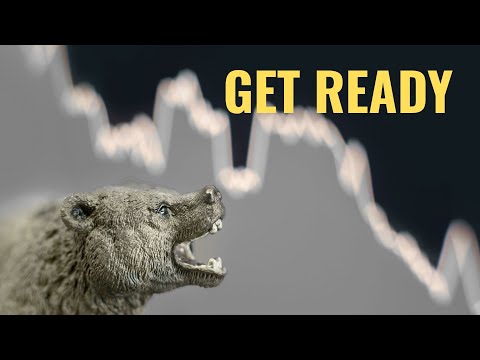
America could be on the cusp of an economic downturn, thanks to the self—defeating, destructive policies of president Donald Trump. Inflation is rising while the dollar is falling, and Trump’s just-passed One Big Beautiful Bill Act is projected to add a whopping $3.4 trillion to the federal deficit. Add to this the uncertainty caused by Trump’s tariffs and immigration policies, along with his threats to fire Federal Reserve Chairman Jerome Powell.
The result, says economist Robert Shapiro, is that the United States economy has become dangerously unstable and vulnerable to financial shocks. Shapiro spoke with Senior Editor Anne Kim for the Washington Monthly podcast. This transcript has been edited for length and clarity.
***
Anne Kim:
You were on the show a few months back, actually at the start of the Trump administration. And in fact, you were one of our very first guests, so thank you very much for returning!
I want to ask you first about your most recent piece for the Monthly, titled Trump’s Budget Could Break the Economy, which sounds pretty dire. And you conclude that “for once, the deficit hawks are right.” I take it that you haven’t always been one of those deficit hawks in the past, so what has changed in your mind? What is in the “One Big Beautiful Bill Act” that worries you so much?
Robert Shapiro:
Deficits that are equivalent to 7% of GDP—that’s what bothers me. For some perspective, in the 1990s, the deficit averaged about 2% of GDP. From 2000 to 2007, it was 1.2% of GDP. Through Trump’s first term, it averaged 3.6% of GDP.
We are now at double the highest rate we’ve seen in a non—recessionary year in our history since World War II. The problem is that deficits have to be funded by somebody’s savings—they can’t be funded by consumption. American households save about 4 or 4.1% of their total disposable income. Businesses save through retained earnings, which is about 3% or 3.6%, I believe. All annual savings in the U.S. economy comes to 7.7% of GDP, and if the Treasury is claiming 7% of GDP, that means there’s nothing left for business investment, mortgages, car loans, or very little—and interest rates spike.
However, we don’t only depend on domestic savings. We live in a global economy, and foreign governments and investors invest in our securities and our economy.
Right now, foreign investors and governments own 33% of our national debt in Treasury securities. They also own 30% of all corporate debt and 27% of all U.S. stocks on all exchanges. So this is how dependent we are on foreign investors.
It means we are totally dependent on foreign investors to fund business investment, car loans, mortgages, credit card debt—all debt. If those countries Trump is trying to punish with tariffs call his bluff, all they have to do is significantly slow their purchases. That will send interest rates across the board substantially higher, slowing the economy.
And if they were to stop buying U.S. securities, the U.S. economy would crash because interest rates would skyrocket. That’s where we are. It’s just the numbers. This is not an interpretation.
Anne Kim:
Can you explain why slowing sales or an outright stoppage of Treasury securities purchases will cause interest rates to spike? My understanding is that have to pay interest when people borrow money from us. And when people aren’t buying, we have to continue raising interest rates in order to entice more people in with higher yields. Is that what’s going on?
Robert Shapiro:
Yes. That is exactly what will go on. If, say, China were to say, “We’re not going to buy any more Treasury securities this year,” then in order to attract other foreign investors, we’d have to raise interest rates to make it worth their while.
There are other economic consequences —the value of the dollar, for instance. Normally when interest rates go up, the value of the dollar goes up. That has not happened. The value of the dollar has fallen 20% against the trade—weighted currency basket since Trump took office.
That means foreign investors are losing interest—mainly in investing in corporate paper and stocks. We haven’t seen that fully in the stock market yet, though we did once. Japan, for about a week, said, “We’re not going to invest in the U.S.” in response to tariffs. The stock market lost thousands of points.
This is not something you take risks with. We are talking about the fundamental stability of the U.S. economy. In the worst—case—but clearly plausible—scenario, we will have our third financial crisis in 18 years.
Anne Kim:
I also read somewhere that the interest on the debt alone is more than what we spend on the U.S. military or the federal share of Medicaid. So it’s already an enormous amount of the federal budget and only going to get even bigger.
Robert Shapiro:
We pay a trillion dollars a year in interest. And we find ourselves in a period where interest on the debt is compounding at a fast rate, because both the budget deficit and the interest are growing faster than the economy.
Anne Kim:
And this is interest going to countries like China, Japan, the UK—whoever holds our debt.
Robert Shapiro:
Yes. One—third of that interest is going abroad. We are sending over $300 billion in interest abroad—that’s more than our trade deficit with China.
Trump doesn’t understand how economies operate. He only wants to hear affirmation of what he already believes. That’s why respected economists and finance people are saying nonsense on TV about tariffs and inflation.
The only thing that will correct this policy is when the costs become a huge political issue.
The U.S. has always depended on the kindness of strangers to finance investment and deficits. Maybe foreign countries will give us slack because they don’t want to take enormous losses if the U.S. economy crashes. But Trump is attacking those countries politically and economically, so if they don’t give us slack, we pay a terrible price. The first casualty of spiking interest rates is employment and income.
So this is not simply about what the yield curve shows. I think everybody is kind of living right now in a fool’s paradise because the deficit hawks have always been wrong before.
Anne Kim:
You mentioned the Fed, and I want to ask about that in a bit. But let’s turn to other threats to the economy. We’ve talked about the deficit, we’ve talked about the falling dollar. When you were on the show a few months back, you also talked about some inflationary pressures posed by the tariffs, but also Trump’s immigration policies. So what is your thinking now, six months into the administration?
Robert Shapiro:
Well, we had seen inflation steadily move down—and it stopped moving down and has begun to move up. We have not seen the full brunt of the tariffs and inflation for two reasons.
One is that lots of businesses stockpiled inventories. Half of our imports are inputs for U.S. manufacturing, and the other half are finished goods and services. You can’t stockpile services, but you can stockpile everything else.
The other reason is that companies—large companies, particularly those dealing in big—ticket items like autos—have been reluctant to raise prices, despite high tariffs on cars and auto parts throughout this period. That’s because of TACO—that is, Trump always changing his mind—because he has gone back and forth so many times on tariffs.
Companies like Ford or BMW that make cars in the U.S. have been reluctant to alienate customers by raising prices until they see the final lay of the land. But that’s running out. The inventories are running out. And it’s become clear that we will have substantially higher tariffs.
Before Trump, we had an average 2% tariff rate. We are now at 15 to 20%.
Anne Kim:
Right. So for example, the latest so—called “agreement” with Japan sets a baseline of 15%, which the Trump administration is spinning as a victory. But the original tariff rate was a lot lower, right?
Robert Shapiro:
Yes, the original tariff rate with Japan was about 3%. So it’s five times higher. We haven’t seen the details yet. The largest—selling auto company in the United States is Toyota, and most of those cars are made in the U.S.—but with parts made in Mexico, Canada, Japan, and elsewhere. We don’t know yet what the new tariff rate will be on those parts.
And this is not a “deal.” It’s an agreement to continue to negotiate. We haven’t seen the full impact yet.
As for deportations—we are beginning to see increases in the cost of domestically produced fruits and vegetables. We’re also seeing this in construction. The largest number and share of undocumented immigrants is in construction. Second is personal services. Agriculture is actually fourth or fifth. Some people are being deported, but a lot of other people are staying away from jobs out of fear that ICE will find them.
And it’s not just unauthorized immigrants—this campaign doesn’t distinguish between authorized and unauthorized. It arrests people based almost entirely on racial profiling.
Anne Kim:
He’s also converting authorized immigrants into unauthorized ones by revoking temporary protected status, for instance, and threatening to revoke visas for others.
Robert Shapiro:
Right. So we will continue to see some cost—push inflation from employment. Look, we’re still creating net new jobs—but at a significantly slower rate than last year. So we are seeing some impact on employment.
There are very few things that virtually all economists agree on. The destructiveness of tariffs for both sides is one. It’s the only thing that Adam Smith and Karl Marx agreed on. The only thing that John Maynard Keynes and Friedrich Hayek agreed on. I certainly know that Adam Smith was a supporter of immigration. Why? Because growth equals increases in employment times productivity increases. That’s the formula.
Smith, Keynes, Hayek, Marx, John Stuart Mill, Milton Friedman—all agreed on that.
Anne Kim:
But not Trump. So I want to ask—as if we didn’t have enough nails in this coffin—about one more, and that is the independence of the Fed and the threats to it. Rob, you were a senior official in the Clinton administration. You’ve dealt with presidents and Fed officials. But have you ever seen anything like the threats Trump has leveled against Chairman Powell?
Robert Shapiro:
No, we’ve never seen anything like this—except by Trump in his first term, when he attacked Janet Yellen, and later when he attacked Jerome Powell.
Trump has this notion that if you cut interest rates, growth will increase. That’s true—unless you have significant inflationary pressures and a strong economy. Right now we have a weak economy.
The first quarter contracted after growing at a 2.8% rate in the last quarter of the last administration. Biden may have gotten some things wrong, but he didn’t get the economy wrong.
Under those conditions, no Fed chair who cares about their reputation would cut rates. What Trump is doing is making the Fed chair a poisoned chalice for whoever he nominates. The markets are going to assume the Fed won’t be independent.
He’ll nominate a loyalist—maybe [Treasury Secretary Scott] Bessent, [National Economic Council Director] Kevin Hassett, or someone else we’re not even looking at. And the markets will assume that person won’t be independent.
I think you’ll get a negative response to virtually anyone he names. You’ll see that response start to kick in as we approach the nomination. The markets will build in the expectation that policy will be inflationary. So even before the Fed does anything, there will be upward pressure on interest rates—and downward pressure on employment and incomes and growth.
Anne Kim:
And that brings us back full circle—meaning that foreign investors will have one more reason to lose confidence in the US economy, which will have ripple effects throughout the economy.
Robert Shapiro:
Right. It all feeds into the deficit—based pressures on interest rates and the economy. This is an economy that runs on credit. That’s why we’re big. That’s why we’re rich.
Trump seems to believe that by force of will, he can mold reality. And that’s true in the response of the people around him. He governs by threat and intimidation.
But it’s the responsibility of mature leadership to step back and say, “I have to govern in the interests of the country based on evidence.” That’s patriotism.
That’s something Trump—and sadly, those around him—don’t seem to understand or care about.
Anne Kim:
I have one final question: Do you think what’s going to happen with the U.S. economy is a slow downturn like a balloon losing air, or are we going to see a crash?
Robert Shapiro:
It’s predictable in a general sense. Crashes require shocks. A shock destabilizes the economy because it’s not expected, and so individuals and businesses don’t prepare. A shock creates enormous uncertainty.
The example I like is the difference between Lehman Brothers and General Motors. They both went bankrupt. One destabilized the global economy. The other didn’t—because we saw it coming and prepared.
What I’ve been writing about is the potential shock from the difficulty of financing the deficit. If our big foreign lenders lose patience, or need to take a stand for their own political reasons, we could see something like 2008—2009.
If not, then we get something like 1981—1982: a very serious recession, or a less serious one, followed by years of higher inflation and higher interest rates.
It’s not only about the severity of the break, but the kind of economy we’ll have afterward.
Anne Kim:
Well on that note, thank you, Rob, and we look forward to seeing you again.


